
What Leasing Companies Require for Insurance (New Driver Guide)
Free to compare
Why Lease Insurance Requirements Are Higher Than Finance or Purchase
You don't own a leased vehicle — the leasing company does. You're paying to use it for a fixed term, typically 24 to 36 months, with strict mileage and condition terms. Because the company retains ownership and needs to recover the car's residual value at lease end, they require insurance that protects their asset from the moment you take possession until you return it.
Leasing companies universally require full coverage insurance, which includes liability, comprehensive, and collision. State minimum liability — often 25/50/25 in many states — won't satisfy a lease agreement. Most lessors mandate at least 100/300/100 liability limits, meaning $100,000 per person for bodily injury, $300,000 per accident, and $100,000 for property damage. Some premium brands require 250/500/100 or higher.
Comprehensive coverage (sometimes called "other than collision") pays for damage from theft, vandalism, weather, or animal strikes. Collision coverage pays for crash damage regardless of fault. Both are mandatory on a lease, and the leasing company will specify a maximum deductible — typically $500 or $1,000. You can choose a lower deductible to reduce out-of-pocket costs after a claim, but you cannot exceed the cap set in your lease contract.
Gap insurance is often required or strongly recommended by lessors. This coverage pays the difference between what you owe on the lease and the car's actual cash value if it's totaled or stolen. New vehicles depreciate quickly — a car can lose 20% of its value in the first year — so gap protection prevents you from owing thousands on a vehicle you can no longer drive. Some lease agreements include gap coverage automatically; others require you to add it to your policy or purchase it through the dealership.
How to Read Your Lease Agreement's Insurance Section
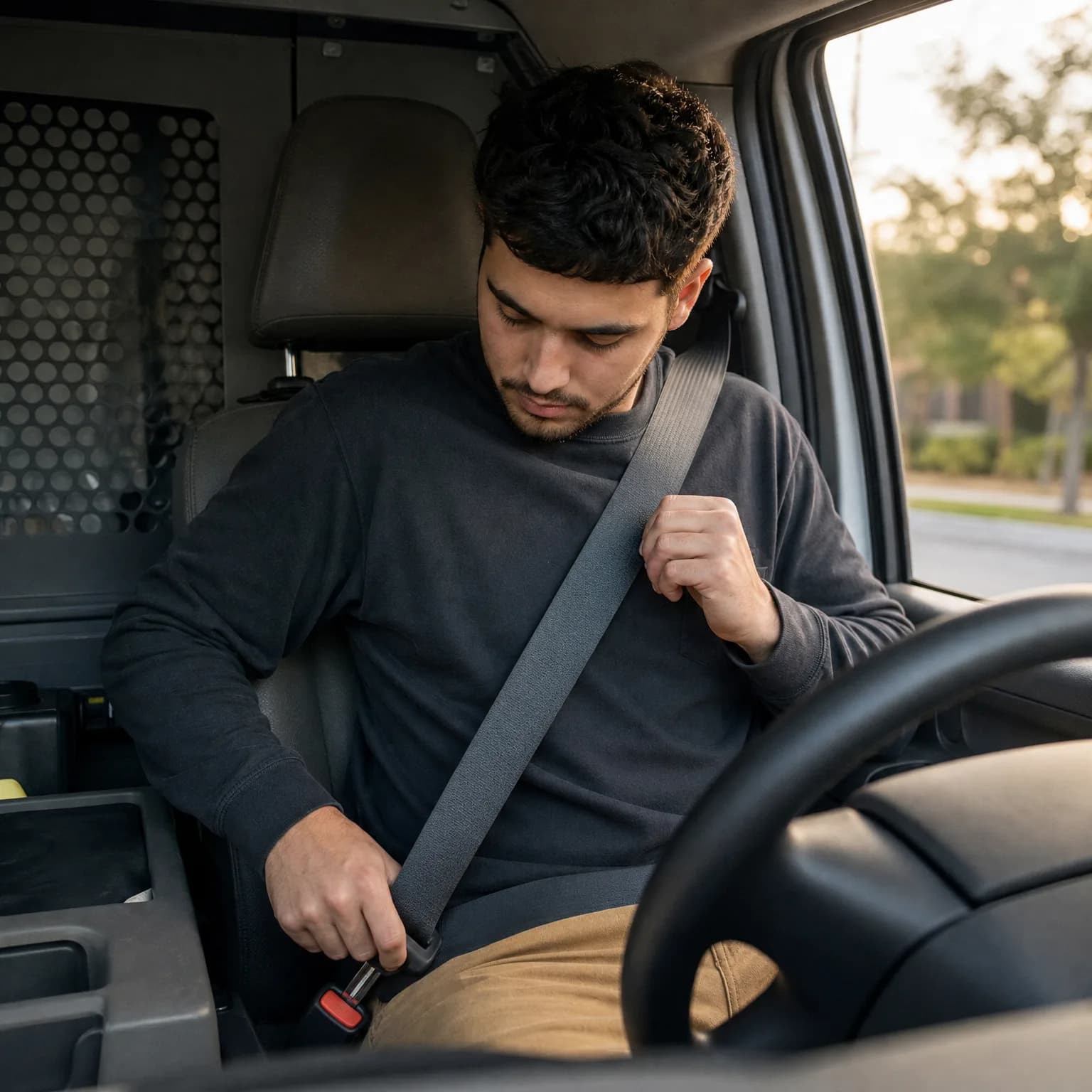
Your lease contract will contain an "insurance requirements" clause, typically in the first few pages. Look for three specific items: minimum liability limits, required physical damage coverage, and deductible caps. These terms are non-negotiable — you must meet them before the dealer releases the vehicle, and you must maintain them for the entire lease term.
The liability section will state required limits in slash notation: 100/300/100, 250/500/100, or similar. The first number is bodily injury per person, the second is bodily injury per accident, and the third is property damage per accident. If your lease requires 100/300/100 and you currently carry 50/100/50, you'll need to increase your liability insurance before signing.
The physical damage section will require "comprehensive and collision with a maximum deductible of $_____." You cannot waive these coverages or choose "liability only" on a leased vehicle. The deductible cap protects the lessor from scenarios where you choose a $2,500 deductible to lower premiums but then can't afford to repair the car after an incident.
Most lease agreements also require you to list the leasing company as "loss payee" or "lienholder" on your insurance policy. This means if the car is totaled or stolen, the insurance check goes to the lessor first to satisfy the lease balance, with any remainder going to you. Your insurance agent will add this designation when you provide the lessor's name and address — it doesn't cost extra, but it's a contract requirement you cannot skip.

What Full Coverage Costs for Drivers Under 25 on a Lease
Drivers under 25 pay significantly higher premiums for full coverage because insurers view young drivers as higher risk based on accident frequency data. A 19-year-old male leasing a midsize sedan can expect to pay $250 to $450 per month for coverage meeting typical lease requirements (100/300/100 liability, $500 deductible comprehensive and collision). Rates vary widely by state, driving record, credit score in states where it's permitted, and the vehicle's value.
The vehicle you lease directly affects your insurance cost. A $45,000 luxury SUV costs more to insure than a $25,000 compact sedan because comprehensive and collision premiums are based on the car's value and repair costs. High-performance vehicles, luxury brands, and models with expensive parts or high theft rates carry higher premiums. If you're comparing lease options, run insurance quotes on each vehicle before signing — the payment difference can exceed $100 per month.
You can reduce costs without violating lease terms by adjusting factors you control. Increasing your deductible from $250 to the lease maximum of $500 or $1,000 typically lowers premiums 15% to 30%. Adding a parent as a named driver (if they have a clean record) can reduce rates, though this works only if the parent actually drives the vehicle occasionally. Bundling your auto policy with renters insurance often yields a 5% to 15% discount. Taking a state-approved defensive driving course can earn you a 5% to 10% discount with most carriers.
Some lessors allow you to meet insurance requirements through a parent's policy if you're listed as a driver and the leased vehicle is added to that policy. This approach often costs less than buying a standalone policy as a young driver, but the parent becomes financially responsible for claims. Verify with both the insurance company and the leasing company that this arrangement satisfies the lease contract before relying on it.

Bring Your Under 25 Rate Back to Earth
Compare Rates for Drivers Under 25How to Get Proof of Insurance Before Your Lease Appointment
Dealerships will not release a leased vehicle without proof of insurance that meets the contract requirements. You must have coverage in place before or during the lease signing appointment — you cannot drive off the lot and "get insurance later." Most dealers require an insurance ID card or email confirmation showing policy effective date, coverage types, limits, and the leased vehicle's VIN.
Call your insurance agent or carrier at least 48 hours before your lease appointment. Provide the vehicle's year, make, model, and VIN (the dealer can give you the VIN once you've chosen a specific car). Tell the agent this is a leased vehicle and provide the exact coverage requirements from your lease agreement. The agent will quote the coverage, bind the policy if you accept, and email you proof of insurance immediately.
If you're adding the leased vehicle to an existing policy, the process takes minutes. If you're buying your first policy, the carrier will need additional information: driver's license number, Social Security number (for credit check in applicable states), current address, and possibly your driving record. Some carriers can bind coverage immediately by phone; others require 24 hours for underwriting review, especially for drivers under 25 with limited driving history.
Bring both digital and printed proof of insurance to your lease appointment. The finance manager will verify coverage limits, effective date, and that the vehicle is listed correctly. They'll also confirm you've added the leasing company as loss payee — some dealers handle this step themselves by calling your insurer directly. Do not sign the lease until coverage is confirmed active; driving without required insurance violates the lease agreement and leaves you personally liable for the vehicle's full value if damaged or stolen.

What Happens If You Drop Coverage or Let Your Policy Lapse
Your lease contract requires continuous insurance coverage for the entire lease term. If your policy lapses or you reduce coverage below required limits, the leasing company will discover it — usually within 30 days — and take action to protect their asset.
Lessors receive automated notifications from insurance companies when a policy covering their vehicle is cancelled or changed. Some lease agreements require you to provide proof of renewal annually. If coverage lapses, the lessor will send a notice demanding proof of insurance within 10 to 15 days. If you don't respond or can't prove coverage, they'll purchase "force-placed insurance" on your behalf and add the cost to your monthly lease payment.
Force-placed insurance costs significantly more than standard coverage — often two to three times your normal premium — and provides only the minimum protection the lessor needs, not full coverage for your benefit. It covers only comprehensive and collision damage to the vehicle itself, with no liability protection for you. If you cause an accident while driving under force-placed coverage, you're personally liable for injuries and property damage to others.
A lapsed policy also creates a coverage gap that increases future insurance costs. Most carriers charge 10% to 30% higher premiums for drivers with recent coverage gaps because gaps correlate with higher claim rates. If you're struggling to afford premiums, contact your insurer immediately to discuss payment plans or coverage adjustments that still meet lease requirements — letting the policy cancel creates worse financial consequences.

Shopping for Coverage That Meets Lease Requirements
Not all insurance companies price coverage the same for young drivers with leases. Rates for identical coverage can vary 40% to 60% between carriers, making comparison shopping essential before you commit to a lease.
Get quotes from at least three carriers before your lease appointment. Provide each with identical information: the vehicle you plan to lease (year, make, model, VIN if available), the coverage requirements from your lease agreement, and your driving history. Ask specifically for 100/300/100 liability, comprehensive and collision with a $500 deductible (or whatever your lease requires), and gap coverage if not included in the lease.
Some carriers specialize in high-risk or young driver coverage and may offer better rates than major national brands. Others provide significant discounts for students with good grades (typically a B average or 3.0 GPA), which can reduce premiums 10% to 25%. If you've completed driver's education or a defensive driving course, bring proof — most carriers offer discounts for formal training.
Avoid binding coverage based solely on monthly payment. Verify the policy actually includes the coverage types and limits your lease requires. Some agents will quote lower rates by reducing liability limits or increasing deductibles beyond lease maximums, which creates a contract violation before you drive off the lot. Request a written quote summary or policy declarations page showing all coverage details before you commit.
Frequently Asked Questions
Can I lease a car with just liability insurance?
No. All leasing companies require full coverage including comprehensive and collision because they own the vehicle and need to protect its value. Liability-only coverage doesn't satisfy lease contract requirements, and the dealer won't release the vehicle without proof of comprehensive and collision coverage.
Does the leasing company check my insurance every month?
Leasing companies receive automated notifications if your policy is cancelled, lapses, or coverage is reduced below contract requirements. They don't manually review your policy monthly, but insurance companies are required to notify lienholders of any coverage changes, so lapses are typically caught within 30 days.
Can I stay on my parents' insurance if I lease a car?
Yes, if your parents' policy includes you as a listed driver and the leased vehicle is added to their policy with coverage meeting lease requirements. The policy must list the leasing company as loss payee. Your parents become financially responsible for the lease and any claims, so verify this arrangement satisfies both the insurer and the leasing company before signing.
What happens if I total a leased car?
Your collision coverage pays the car's actual cash value to the leasing company as loss payee. If you owe more on the lease than the car's value — common in the first 12 to 24 months — gap insurance covers the difference. Without gap coverage, you're personally responsible for paying the remaining lease balance on a vehicle you can no longer drive.
Can I change my insurance deductible during the lease?
You can lower your deductible anytime, but you cannot raise it above the maximum specified in your lease contract (typically $500 or $1,000). Increasing the deductible beyond the lease cap violates your contract and could trigger force-placed insurance from the lessor.
Related Articles

Delivery Driver Insurance for New Drivers Under 25
4/5/2026

Leaving Parents' Policy Without Gap in GA
6/11/2026

Car Insurance for New Military Drivers Under 25
4/5/2026

Gap Insurance for New Drivers With Car Loans
4/5/2026

TX Financed Car Full Coverage Rules
6/11/2026
Add a Car to Insurance Before Driving Off the Lot
4/5/2026