
What Not to Say to an Insurance Adjuster After an Accident
Free to compare
Why Adjusters Record Your First Statements Differently Than You Think
If you just had your first accident, you're probably expecting the insurance adjuster to work like a school administrator or police officer — someone who rewards honesty and penalizes silence. That instinct costs young drivers thousands of dollars annually. Insurance adjusters document every statement you make in the first call, and those documented statements become the foundation for denying or reducing your claim later, even if medical issues or vehicle damage show up days afterward.
Most drivers under 25 don't realize that recorded statements are legally binding evidence that can override police reports, witness accounts, and even your own later recollection of the accident. The adjuster calling you 12 hours after the crash isn't gathering information to help you — they're building a liability defense for their company. Industry data from the Insurance Information Institute shows that approximately 30% of claims are reduced or denied based entirely on policyholder statements made in the first 48 hours, before injuries fully manifest or repair estimates come back higher than expected.
This matters especially if you're a new driver because you likely don't have prior claim experience to recognize when a friendly question is actually a liability trap. The adjuster already has the police report, photos from the scene, and your policy details. What they need from you is a statement that limits their payout — and they're trained to get it by sounding helpful, casual, and rushed.

Never Say These Four Phrases in Your First Call
The most damaging statement young drivers make is any version of "I'm sorry" or "It was my fault." Even if you rear-ended another car, state law in most jurisdictions applies comparative negligence rules that can assign partial fault to the other driver if they braked suddenly without cause, had nonfunctional brake lights, or made an illegal lane change. Saying "I'm sorry, I didn't see them" in your first call eliminates that investigation entirely and assigns you 100% liability before your insurer even reviews the evidence.
The second phrase to avoid is any speculation about your injuries: "I feel fine" or "I'm not hurt." Soft tissue injuries, whiplash, and concussion symptoms often don't appear for 24 to 72 hours after an accident. Once you tell an adjuster you feel fine, any medical claim you file later will be questioned as fraudulent or unrelated to the accident. If you're asked about injuries in the initial call, the only safe answer is: "I'm still being evaluated and will provide medical documentation when available."
Third, never estimate damage amounts or agree that damage looks "minor." Frame damage on a 2015 Honda Civic can cost $4,500 to repair even when the visible dent looks small, and you have no way to assess mechanical or electrical damage from a visual inspection. Saying "it doesn't look that bad" creates a documented ceiling on what the adjuster will authorize for repairs. Fourth, don't provide a detailed narrative of the accident in the first call. The adjuster will ask you to "walk me through what happened" as though it's a formality, but you're actually writing their script for denying your claim. State only the date, time, location, and that you're still gathering information — nothing more.


What to Say Instead: The Neutral Statement Script
When the adjuster calls, your goal is to confirm basic facts without providing ammunition for a denial. Start with: "The accident occurred on [date] at approximately [time] at [location]. I've filed a police report and I'm still collecting information. I'll provide a full statement once I've reviewed all documentation and spoken with my own insurance representative." That sentence confirms the claim exists, shows you're cooperating, and delays the detailed statement until you understand what actually happened.
If the adjuster pushes for details about fault, use this exact phrase: "I don't have enough information yet to characterize fault, and I want to make sure my statement is accurate." This is not evasive — it's honest. You don't know if the other driver was texting, if a mechanical failure contributed, or if a third vehicle cut someone off and left the scene. Admitting fault in hour one waives your right to a fair investigation.
For injury questions, say: "I'm following up with medical providers and will submit documentation as it becomes available." For vehicle damage: "I haven't received a repair estimate yet." For requests to give a recorded statement immediately, respond with: "I'd like to review my policy and the police report before providing a recorded statement. When is the latest I can schedule that?" Most states require you to cooperate with your insurer's investigation, but cooperation doesn't mean immediate compliance — you typically have 7 to 10 days to provide a formal statement under standard policy language.

Bring Your Under 25 Rate Back to Earth
Compare Rates for Drivers Under 25Special Considerations If You're Under 25 or on a Parent's Policy
If you're listed on a parent's policy, the adjuster may try to speak with you directly rather than the named policyholder, especially if you were the driver during the accident. This creates a tactical problem: your parents may have claim experience and know what not to say, but you don't, and the adjuster knows that. If you receive a call and you're not the named insured, you can say: "I need to have the policyholder present for this conversation. Let me coordinate a time when we're both available."
Young drivers are also more likely to be asked about distractions, phone use, or passenger behavior because insurers statistically associate drivers under 25 with higher-risk behaviors. If an adjuster asks "Were you on your phone?" or "Had you been drinking?", do not answer with an immediate defensive denial. That signals guilt even if you're innocent. Instead: "I was operating the vehicle legally and following all traffic laws. I'll provide a complete statement once I've reviewed the police report." This keeps the focus on documentation rather than your verbal defense.
If the accident involved liability coverage questions — meaning you hit someone else or caused property damage — the stakes are higher because your insurer is defending you against a third-party claim. In these cases, your statement directly affects whether your insurer will cover the damages or deny the claim and force you to pay out of pocket. Never discuss the accident with the other driver's insurance company without consulting your own insurer first. You have no obligation to speak with them, and anything you say can only hurt you.
What Happens After You Delay the Statement
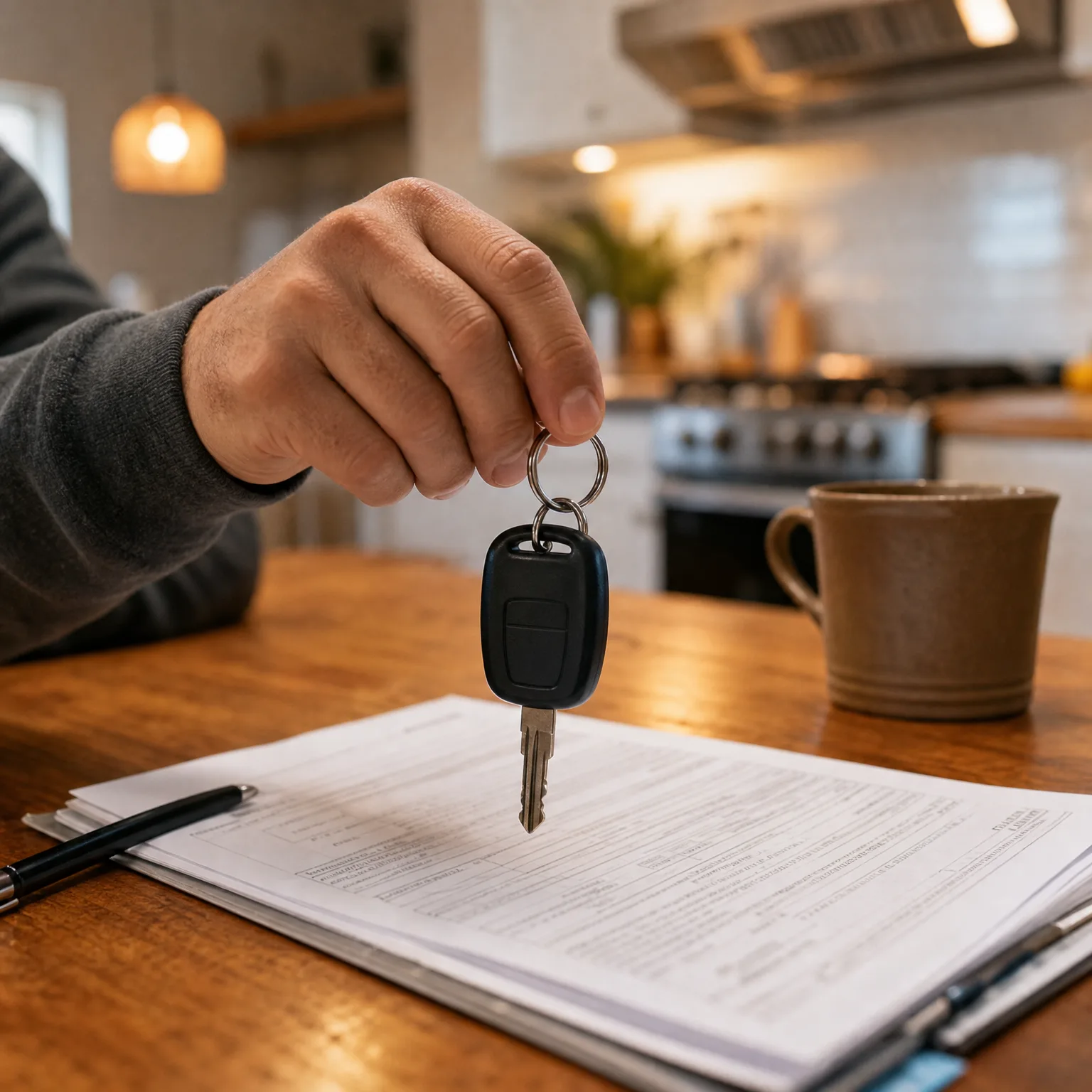
Delaying your detailed statement by 48 to 72 hours gives you time to collect the police report, take photos of all vehicle damage, document any injuries with a medical provider, and review your own policy's claims process. It also lets you consult with your parents or a legal advisor if the accident involved significant damage or injuries. Most importantly, it moves you out of the shock and adrenaline phase where you're likely to misremember details or minimize your own injuries.
During this delay window, document everything in writing: the other driver's insurance information, the exact location and road conditions, any witnesses, and a timeline of when symptoms or vehicle problems appeared. When you do provide your formal statement — whether to your own insurer or in response to a third-party claim — you'll be working from documentation rather than memory. This makes your statement more credible and harder to challenge.
If your insurer pressures you to give an immediate recorded statement and implies that delaying will result in a claim denial, ask them to cite the specific policy provision that requires same-day cooperation. Standard auto policies require "prompt" notice and "reasonable" cooperation, but neither term means "within 12 hours." If you're genuinely unsure whether you're being reasonable, say: "I want to cooperate fully, and I also want to make sure my statement is accurate. I'll have everything ready by [specific date within 7 days]. Is there a policy reason that timeline doesn't work?"
Once you've given your statement, it's locked in. You can't revise it later when you remember new details or when injuries worsen. That's why the 72-hour window matters — it's your only chance to get the facts right before they become evidence against you.
How This Affects Your Rate After the Claim Closes
Even if your claim is paid in full, the way you handled the initial adjuster conversation affects your rate at renewal. If you admitted fault immediately, your insurer will surcharge your premium as an at-fault accident — typically increasing your rate by 20% to 40% for three to five years depending on your state and carrier. If the investigation assigns partial fault to the other driver, your surcharge may be lower or waived entirely under some carriers' accident forgiveness programs.
Young drivers already pay higher base rates — nationally, drivers under 25 pay approximately 50% to 100% more than drivers over 25 for the same coverage. An at-fault accident surcharge on top of that age penalty can push monthly premiums from $150 to $250 or higher, depending on your state and coverage limits. If you're on a parent's policy, your accident may also trigger a surcharge on their premium and affect their eligibility for multi-car or claims-free discounts.
After your claim closes, compare quotes with other carriers before your renewal. Some insurers weigh young-driver accidents more heavily than others, and switching carriers can sometimes offset the surcharge if you're moving to a company that offers better rates for your profile. Use a comparison tool that shows you pricing from multiple carriers at once rather than calling each one individually — this saves time and ensures you're seeing the actual post-accident rate environment rather than the teaser rates advertised to drivers with clean records.
Frequently Asked Questions
Can an insurance adjuster deny my claim if I refuse to give a recorded statement immediately?
No, as long as you provide a statement within a reasonable timeframe — typically 7 to 10 days under standard policy language. Your insurer cannot deny a claim solely because you delayed a recorded statement by 48 to 72 hours to gather documentation. If they threaten denial, ask them to cite the specific policy provision requiring same-day cooperation.
What if I already told the adjuster I was at fault — can I correct that statement later?
You can submit additional information or clarification, but you cannot retract a recorded statement once it's been documented. If new evidence shows the other driver shares fault, provide that evidence in writing to your claims representative and request that they reopen the fault investigation. However, your initial admission will remain part of the claim file and may limit how much fault can be reassigned.
Do I have to talk to the other driver's insurance company after an accident?
No. You have no legal obligation to provide a statement to the other driver's insurer, and doing so can only hurt your case. Let your own insurance company handle all communication with the other party. If the other driver's insurer contacts you directly, say: "Please direct all questions to my insurance company" and provide your insurer's claim number.
How long does an at-fault accident affect my insurance rate?
Most insurers surcharge your premium for three to five years after an at-fault accident, though some states limit the surcharge period by law. The surcharge typically decreases each year if you avoid additional violations or claims. After the surcharge period ends, the accident may still appear on your motor vehicle record but will no longer affect your rate with most carriers.
Related Articles

Delivery Driver Insurance for New Drivers Under 25
4/5/2026

Leaving Parents' Policy Without Gap in GA
6/11/2026

Car Insurance for New Military Drivers Under 25
4/5/2026

Gap Insurance for New Drivers With Car Loans
4/5/2026

TX Financed Car Full Coverage Rules
6/11/2026

Add a Car to Insurance Before Driving Off the Lot
4/5/2026