Snapshot Program for New Drivers — Usage-Based Insurance Worth It?
Free to compare
Why Snapshot Sounds Better for New Drivers Than It Often Performs
You're staring at a quote that's probably $180–$320/mo because you're under 25, and Progressive is offering a Snapshot device that could save you "up to 30%." That sounds like $54–$96/mo back in your pocket. The problem is that "up to" number assumes a near-perfect score, and new drivers typically land in the 10–15% discount range — not because they drive dangerously, but because the behaviors Snapshot penalizes hardest (sudden braking, late-night driving, high mileage) are exactly what inexperienced drivers do more often.
Snapshot is a usage-based insurance program that tracks how you drive using either a plug-in device or a mobile app. It monitors hard braking events, time of day you drive, total miles driven, and in some states, how often you use your phone while driving. Progressive reports the average Snapshot user saves around $146 per year, which breaks down to roughly $12/mo — helpful, but nowhere near the maximum discount advertised. For a new driver paying $2,400/year, that's a 6% reduction, not 30%.
The gap between expectation and reality matters because Snapshot operates on an opt-in gamble: your rate can't go up during the initial monitoring period, but if you score poorly, you miss out on savings you might have found by shopping competitors instead. The real question isn't whether Snapshot can save you money — it's whether the discount you'll actually earn beats what you'd get by comparing standard quotes from five carriers, which takes about 15 minutes and doesn't require monitoring your driving for six months.

The Break-Even Math Most New Drivers Skip
Here's the calculation that matters: take your current monthly premium and multiply by 0.10 (a realistic 10% discount for a cautious but inexperienced driver). If that number is smaller than the difference between your current insurer's quote and the next-cheapest competitor's quote, Snapshot isn't your best move — switching carriers is.
Example: You're quoted $240/mo with Progressive. A 10% Snapshot discount saves you $24/mo, or $288/year. But if Geico quotes you $210/mo with no telematics required, you're already saving $30/mo ($360/year) without any monitoring. The Snapshot discount would need to hit 12.5% just to match that, and fewer than 30% of Snapshot users exceed a 15% discount according to Progressive's own participation data.
The math shifts if you're already with Progressive and no competitor can beat their base rate. In that scenario, Snapshot is pure upside — your rate stays flat if you score poorly, and any discount is a win. But if you haven't shopped around yet, you're optimizing the wrong variable. New drivers often have wider rate variance between carriers (sometimes $80–$120/mo spread) than any telematics discount can deliver.


What Actually Kills Snapshot Scores for Drivers Under 25
Snapshot's algorithm penalizes four behaviors, and new drivers statistically do all of them more than older drivers. Hard braking events — defined as decelerating more than 7 mph per second — are the biggest score killer. Experienced drivers anticipate traffic flow and brake gradually; new drivers brake late and hard because they're still building that prediction skill. A driver with 15+ hard brakes per 100 miles driven typically sees zero discount.
Driving between midnight and 4 a.m. triggers a penalty because crash risk is statistically higher during those hours. If you work a closing shift, drive home from late classes, or visit friends on weekends, you're accumulating high-risk hours even if you're driving cautiously. Drivers with more than 10% of their trips during those hours see discounts cut by roughly half compared to daytime-only drivers.
Total mileage matters because more exposure equals more risk. If you're commuting to school or work and driving 12,000+ miles per year, you'll score worse than someone driving 6,000 miles annually, even if your driving behavior is identical per mile. Phone use while driving (tracked via the app version) is an automatic major penalty — even a hands-free call can register as distraction in some versions of the program.
The compounding effect is what surprises new drivers: you might think you're driving safely, but two hard brakes per day during a 15-mile commute, plus three late-night weekend trips per month, plus 1,000 miles/month of driving drops you into the 5–10% discount tier fast. That's not reckless driving — that's normal life for a working or college-attending 22-year-old.
When Snapshot Actually Makes Sense for a New Driver
Snapshot works best if you drive infrequently, keep predictable daytime hours, and already have smooth braking habits from defensive driving training. If you're driving under 7,500 miles per year, avoid highways (where hard braking is more common), and rarely drive after 10 p.m., you'll likely land in the 18–25% discount range, which is material savings.
It also makes sense if you've already shopped five or more carriers and Progressive delivered the lowest base quote. In that case, Snapshot is a no-risk add-on — worst case, you get no discount and stay at the rate you already accepted. Best case, you save $15–$40/mo depending on how well you score.
The program can be worth it if you're on a parent's policy and trying to prove you're a lower risk than your age suggests. Some families use Snapshot data as a teaching tool — parents review hard braking events with their teen driver and use it to build better habits. The financial discount becomes secondary to the behavioral feedback. If that's your situation, the monitoring period serves double duty.
Avoid Snapshot if you're comparing it to non-standard coverage options after a violation — telematics programs generally require a clean record to start, and if you need an SR-22 filing, you're better off focusing on high-risk specialists rather than discount optimization with a standard carrier.

Bring Your Under 25 Rate Back to Earth
Compare Rates for Drivers Under 25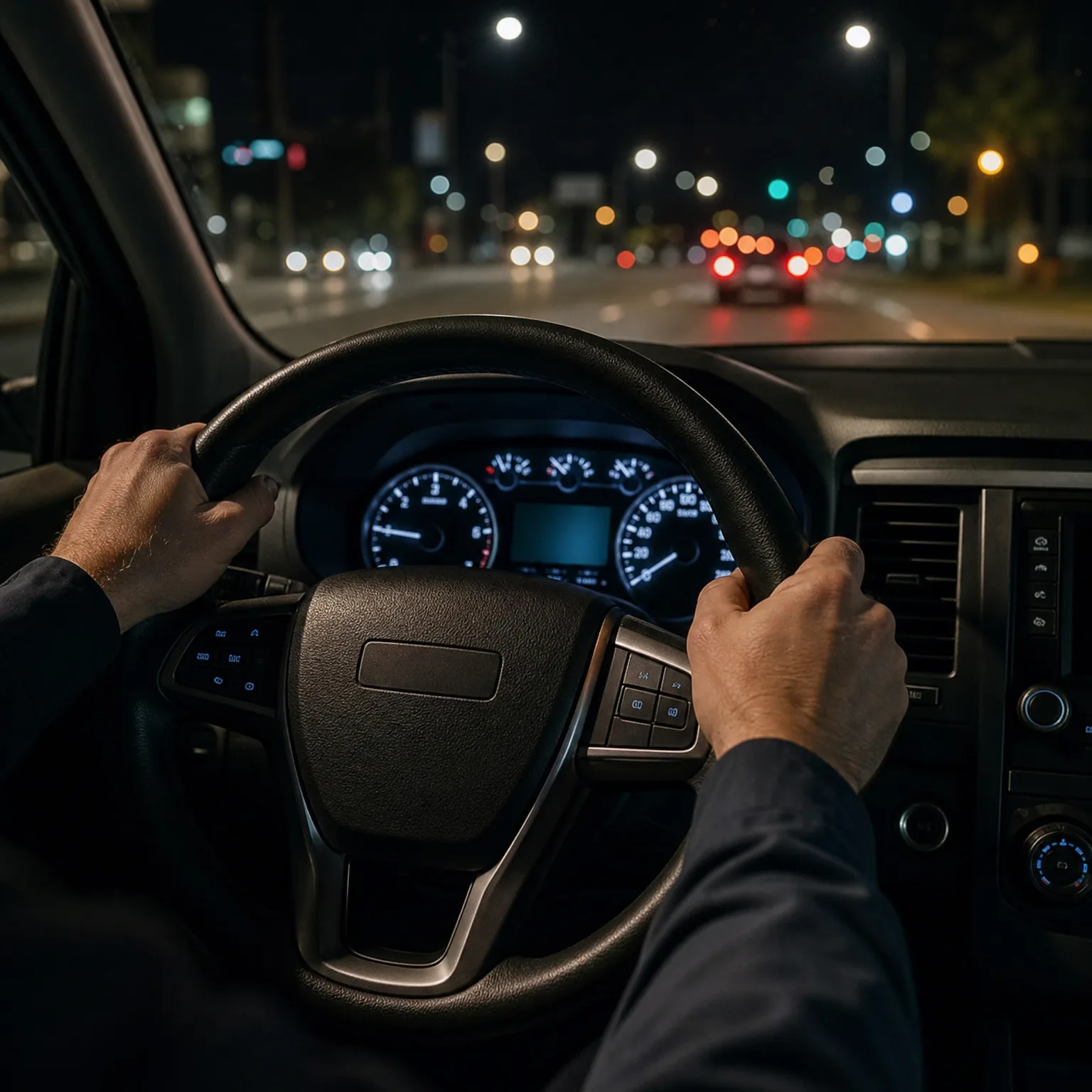
How to Maximize Your Snapshot Score If You Decide to Try It
If you're moving forward with Snapshot, treat the first two weeks as a calibration period. Drive as perfectly as possible — no hard braking, no late nights, minimal mileage — to establish a high baseline score. The program weighs early performance heavily, and a strong start gives you buffer room for later slip-ups.
Increase your following distance to at least four seconds behind the car in front of you. This gives you time to brake gradually when traffic slows, which is the single most controllable factor in your score. Most hard braking happens because drivers follow too closely and have to slam the brakes when the lead car slows unexpectedly. At 40 mph, four seconds equals about 235 feet — roughly half a city block.
Consolidate errands and trips to reduce total mileage. Instead of three separate trips for groceries, gas, and errands, combine them into one route. If you can carpool, bike, or use transit for any regular trips, do it during the monitoring period. Every 100 miles you don't drive is 100 miles that can't hurt your score.
If possible, shift late-night driving to earlier in the evening. Leaving a friend's house at 11:45 p.m. instead of 12:15 a.m. can keep that trip out of the penalty window. If you work a late shift, ask your employer if you can adjust your schedule during the monitoring period — six months of slightly earlier hours might be worth $200–$300 in annual savings if it bumps you from a 10% to a 20% discount.

Alternatives That Might Save You More Without Monitoring
Before committing to six months of behavior tracking, compare quotes from at least four carriers. New drivers often see rate swings of 40–60% between the most and least expensive insurers for identical coverage. A difference of $70/mo between carriers equals $840/year — more than most Snapshot participants ever save.
Look for discounts you can control immediately: good student discounts (typically 10–25% if you maintain a B average or 3.0 GPA), defensive driving course completion (5–10% in most states), and bundling with renters insurance if you live independently. These stack with each other and don't require ongoing monitoring. A student with a 3.2 GPA who completes a $35 online defensive driving course can often save $400–$600/year across multiple insurers.
Consider increasing your deductible from $500 to $1,000 if you have emergency savings to cover the difference. This typically reduces premiums by 10–15% and is a one-time decision rather than a six-month gamble. If you're driving an older car worth under $5,000, dropping collision coverage entirely can save $40–$80/mo, though you'll pay out of pocket for your own vehicle damage in an at-fault crash.
If you're still on a parent's policy, staying there as a listed driver is almost always cheaper than getting your own policy, even with a Snapshot discount. The age-based rate penalty is so steep for solo policies under 25 that the family policy structure typically saves $100–$200/mo compared to any individual option.
Making the Decision: Snapshot vs. Shopping Around
Start by getting quotes from four carriers without mentioning telematics. Use identical coverage limits for each quote so you're comparing apples to apples — the same liability limits, deductible, and optional coverages. Write down the monthly cost for each.
Now look at the lowest quote you received. Calculate what a 10% discount would be (multiply by 0.10), and a 20% discount (multiply by 0.20). The first number is what you'll probably get from Snapshot if you're an average new driver. The second is what you might get if you drive very little and score well. Compare those savings to the difference between the highest and lowest quotes you received.
If the spread between quotes is larger than even the optimistic 20% Snapshot discount, shopping carriers is your better move. If the quotes are all within $20/mo of each other and the lowest one offers Snapshot, then the telematics program becomes worth trying — you're already at the best base rate, so any additional discount is pure gain.
The final variable is your driving pattern honesty. If you know you drive 15,000 miles per year, work until midnight three nights a week, and commute on a highway with unpredictable traffic, Snapshot will likely disappoint you. If you drive 6,000 miles per year, work 9-to-5, and mostly take surface streets, it'll probably deliver real savings. The program rewards low-exposure, predictable driving — and most new drivers don't fit that profile yet, no matter how safely they drive when they're behind the wheel.
Frequently Asked Questions
Can Snapshot increase my insurance rate if I drive poorly?
No, your rate cannot increase during the initial Snapshot monitoring period, which typically lasts six months. Worst case, you receive zero discount and keep your original quoted rate. However, after the monitoring period ends, your rate is subject to normal renewal increases that apply to all policyholders.
How long does the Snapshot monitoring period last?
Progressive's standard Snapshot monitoring period runs for six months, though some states use a shorter 90-day window. You'll receive your final discount calculation within 1–2 weeks after the monitoring period ends, and the discount applies to your next renewal.
Do all insurance companies offer telematics programs like Snapshot?
No, but most major carriers now offer similar programs: State Farm has Drive Safe & Save, Geico has DriveEasy, Allstate has Drivewise, and Nationwide has SmartRide. Discount structures and monitoring methods vary, but all track similar behaviors like hard braking, mileage, and time of day driving.
Will Snapshot work if I don't have a smartphone?
Yes, Progressive offers a plug-in device version of Snapshot that connects to your vehicle's diagnostic port and doesn't require a smartphone. The device version tracks the same behaviors except phone usage while driving, which only the app-based version monitors.
Can I cancel Snapshot if my score is tracking lower than expected?
Yes, you can unenroll from Snapshot at any time during the monitoring period. If you cancel, you keep your original quoted rate with no discount applied. Some drivers monitor their score via the app and cancel early if they're tracking toward a very small discount that isn't worth continuing.
Related Articles

Delivery Driver Insurance for New Drivers Under 25
4/5/2026
Leaving Parents' Policy Without Gap in GA
6/11/2026

Car Insurance for New Military Drivers Under 25
4/5/2026

Gap Insurance for New Drivers With Car Loans
4/5/2026

TX Financed Car Full Coverage Rules
6/11/2026

Add a Car to Insurance Before Driving Off the Lot
4/5/2026