
Safe Driver Programs: What Telematics Actually Tracks in Your Car
Free to compare
Why Carriers Push Telematics Programs to New Drivers
You just got your first car and finished shopping for insurance — then the agent mentions a safe driver program that could save you 20–30%. The pitch sounds appealing when you're staring at a $200–$350/mo premium, but telematics programs exist because carriers lose money on drivers under 25. Industry data shows drivers aged 16–19 file claims at nearly three times the rate of drivers over 25, and insurers use monitoring programs to separate genuinely low-risk young drivers from the statistical average.
Telematics works through either a smartphone app or a plug-in device that connects to your car's OBD-II port (the diagnostic port mechanics use, usually under your steering wheel). Both methods track the same core behaviors: hard braking, rapid acceleration, speed relative to posted limits, time of day you drive, total miles driven, and phone handling while the vehicle is moving. Some carriers add cornering force, seatbelt use detection, and idle time to the scoring algorithm.
The enrollment window matters. Most carriers require you to sign up within the first 30–60 days of your policy start date, and the monitoring period typically runs 90–180 days before your discount gets finalized. Miss that window and you'll wait until your next policy renewal to enroll, which means paying full rate for six to twelve months.

What Gets Measured and How Scores Get Calculated
Safe driver programs don't measure every moment equally. Hard braking events — defined as deceleration exceeding 7–8 mph per second — carry the heaviest weight in most scoring systems because they correlate strongly with collision risk. A panic stop once every 200 miles might not hurt your score, but multiple hard braking events per trip signal either distracted driving or following too closely, both high-risk behaviors.
Time-of-day tracking penalizes driving between 11 PM and 4 AM, when fatal crash rates are roughly three times higher than midday hours according to NHTSA data. For drivers under 25, this creates a scoring disadvantage if you work closing shifts, have late college classes, or drive home from social events after midnight. The algorithm doesn't distinguish between a 2 AM commute home from work and a 2 AM drive home from a party — both register as high-risk hours.
Phone handling detection varies by program type. App-based programs like Root or Allstate Drivewise can detect when you unlock your screen, open apps, or make calls while the vehicle is moving. Plug-in devices can't monitor your phone directly but some carriers cross-reference Bluetooth connection patterns to flag likely phone use. Even hands-free calls sometimes trigger violations in stricter programs.
Mileage caps exist in nearly every program. Carriers advertise telematics as "pay per mile" but what they mean is lower discounts for higher mileage. Drive under 7,500 miles annually and you might qualify for maximum discounts. Exceed 12,000 miles and your discount shrinks even if every other behavior scores well, because exposure — time on the road — directly correlates with claim probability.

Realistic Discount Ranges and How They Apply to High Base Rates
Marketing materials promise discounts up to 30–40%, but average participants see 10–15% savings after the monitoring period ends. For a new driver paying $280/mo, a 15% discount brings the rate down to $238/mo — a $42 monthly savings that takes 3–6 months of monitored driving to earn. The initial enrollment discount (typically 5–10%) applies immediately, then adjusts up or down based on your final score.
Carriers handle poor scores differently. State Farm and Progressive allow your discount to shrink to zero but won't increase your base premium based on telematics data alone. Root and Metromile, which are usage-based from the start, can raise your rate if driving behavior suggests higher risk than your initial quote assumed. Read the enrollment disclosure — it will specify whether participation can ever result in a rate increase or only affect discount eligibility.
The discount doesn't compound with other reductions the way new drivers expect. If you already have a good student discount (15–20%), a multi-car discount (10–25%), and a paid-in-full discount (5–8%), adding a 12% telematics discount doesn't stack multiplicatively. Most carriers apply the largest discount first, then smaller discounts to the reduced premium, which means your effective telematics savings might be closer to 8–10% of your current rate, not 12% of the base premium.
Renewal behavior matters as much as enrollment. Some carriers require you to continue monitored driving indefinitely to keep the discount. Others lock in your discount after the initial period but reserve the right to re-evaluate if you file a claim or add a violation to your record. Check whether your discount is permanent or conditional before committing to long-term app permissions or a device that stays plugged into your car for years.

Bring Your Under 25 Rate Back to Earth
Compare Rates for Drivers Under 25Behaviors That Hurt New Driver Scores Most
Hard braking in stop-and-go traffic generates the majority of score penalties for urban drivers under 25. The algorithm can't distinguish between a necessary panic stop to avoid a collision and poor following distance that requires frequent hard braking. If you commute through congested areas during rush hour, expect 3–8 hard braking events per week to register even with defensive driving habits.
Late-night and early-morning trips damage scores regardless of trip purpose. A 1 AM drive home from a campus library during finals week counts the same as a 1 AM drive home from a bar. Carriers using app-based monitoring can theoretically detect that your phone was stationary (suggesting you were parked studying), but scoring algorithms don't currently factor in stop duration or location context — only drive start and end times.
Rapid acceleration from stoplights shows up as a risk factor even when you're matching traffic flow. Telematics systems flag acceleration exceeding 8–10 mph per second, which happens easily when merging onto highways or matching the pace of aggressive traffic. In practice, defensive driving sometimes requires quick acceleration to avoid being rear-ended by faster-moving vehicles, but the device reads it as risky behavior.
Phone use violations accumulate quickly for drivers who rely on navigation apps. Opening Google Maps or Waze while stopped at a red light can register as phone handling if the vehicle is still in drive. Some programs pause violation tracking when the vehicle is stationary, but others monitor any screen interaction from ignition-on to ignition-off, which penalizes behavior that poses zero actual crash risk.
When Telematics Programs Make Sense for Your Situation
Telematics works best for new drivers with predictable schedules, suburban or rural commutes, and low annual mileage. If you drive 30 miles roundtrip to a 9–5 job on uncongested roads and rarely drive after 10 PM, you'll likely score well and earn the advertised discount range. These conditions describe fewer than 40% of drivers under 25, but if your situation matches, enrollment is low-risk.
Skip telematics if you work irregular hours, live in a city with heavy traffic, or drive frequently between 11 PM and 5 AM. The scoring penalties from time-of-day and hard braking events will erase most potential savings, and you'll spend 90–180 days being monitored for a 5–8% final discount that barely offsets the rate you'd get from switching carriers or raising your deductible. The opportunity cost — time spent managing the app and modifying driving habits — often exceeds the value of a minimal discount.
Consider how monitoring data could affect you after an accident. While carriers claim telematics data won't be used against you in claims disputes, your driving score and trip history become part of your policy record. If you're involved in a not-at-fault collision, the carrier will have detailed data showing you were driving at 2 AM in an area with high accident rates, which could influence settlement negotiations or subrogation recovery even if the data didn't directly cause a coverage denial.
Compare telematics discounts against other available rate reduction strategies before enrolling. Completing a defensive driving course saves 5–10% in most states and requires no ongoing monitoring. Increasing your deductible from $500 to $1,000 typically reduces your premium by 10–15% and gives you immediate savings rather than waiting months for a monitoring period to end. If you're comparing quotes from multiple carriers, the baseline rate difference between insurers often exceeds any telematics discount a single carrier offers.

How to Maximize Your Score During the Monitoring Period
Increase your following distance to three seconds minimum in all traffic conditions. This single change prevents the majority of hard braking events because you'll have time to decelerate gradually when traffic slows. In stop-and-go traffic, leave enough space that you rarely need to brake completely — momentum management keeps your score cleaner than constant stop-and-start driving.
Avoid all driving between midnight and 5 AM unless absolutely necessary for work. If you have a job that requires late-night driving, get a letter from your employer documenting your work schedule and submit it to your carrier. Some insurers will adjust scoring parameters for verified shift workers, though this isn't guaranteed and varies by company.
Disable the monitoring app or unplug the device for short trips under one mile. Most programs don't register trips shorter than 0.5–1.0 miles, which means you can run quick errands to a nearby store without generating score data. Check your program's minimum trip length in the terms — this information appears in the enrollment agreement but rarely gets explained by agents.
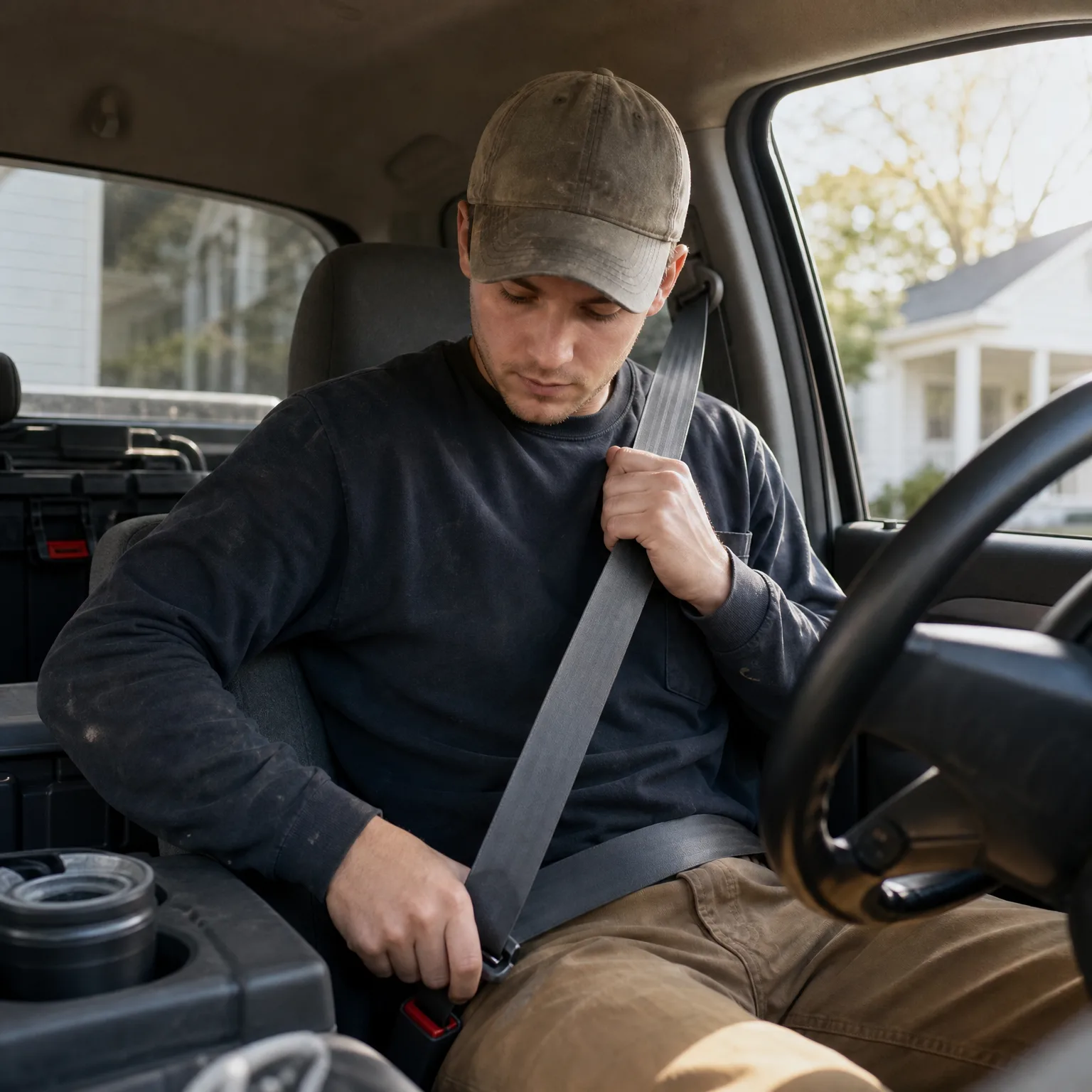
Never touch your phone while the vehicle is in drive, even when stopped at red lights. Put your phone in a cupholder or bag before you start the car and don't interact with it until you've parked and turned off the ignition. If you need navigation, set your destination before shifting into drive, or use voice commands exclusively once moving.
Frequently Asked Questions
Can insurance companies raise my rate based on telematics data?
It depends on the carrier and program type. Traditional insurers like State Farm and Progressive typically allow discounts to shrink to zero but won't raise your base premium based on driving score alone. Usage-based insurers like Root or Metromile can increase your rate if monitoring data shows riskier behavior than your initial quote assumed — this will be disclosed in your enrollment agreement.
What happens to my discount if I file a claim during the monitoring period?
Your telematics discount and your claim are evaluated separately in most programs. Filing a claim affects your base premium at renewal based on your carrier's standard rating rules, but it shouldn't reduce the discount you've earned through monitored driving. However, some carriers reserve the right to remove telematics discounts if you file multiple at-fault claims within a policy period.
Do I have to keep the app running or device plugged in after the monitoring period ends?
This varies by carrier. Some programs lock in your discount after 90–180 days and let you uninstall the app or remove the device. Others require continuous monitoring to maintain the discount, meaning you'll need to keep the app active or device installed for as long as you want the rate reduction.
Will telematics data be used against me if I'm in an accident?
Carriers state that telematics data is used only for pricing and discounts, not fault determination in claims. However, your trip history and driving patterns become part of your policy record, and in disputed claims or subrogation cases, detailed driving data could theoretically be referenced. No widespread pattern of this occurring exists, but the data is accessible.
Can I cancel a telematics program mid-monitoring period without penalty?
Yes, you can typically cancel anytime by uninstalling the app or removing the device, but you'll lose any discount you've earned. Most programs apply a small initial discount (5–10%) upon enrollment that remains until you opt out, then your rate returns to the standard premium at your next billing cycle.
Related Articles

Delivery Driver Insurance for New Drivers Under 25
4/5/2026

Leaving Parents' Policy Without Gap in GA
6/11/2026

Car Insurance for New Military Drivers Under 25
4/5/2026
Gap Insurance for New Drivers With Car Loans
4/5/2026

TX Financed Car Full Coverage Rules
6/11/2026
Add a Car to Insurance Before Driving Off the Lot
4/5/2026