
How Graduated Licensing Cuts Your Insurance Rate Faster
Free to compare
The Rate Drop Timeline Most New Drivers Miss
You just completed your six-month provisional period and expected your insurance rate to drop automatically. It didn't. That's because graduated driver licensing (GDL) programs create distinct insurance pricing tiers at each stage, but carriers typically don't reduce your rate until you notify them of status changes and provide license verification. A driver moving from learner's permit to provisional license can see rates decrease 15–25%, and the jump from provisional to unrestricted license often triggers another 10–20% reduction — but only if the insurer updates your policy classification.
The disconnect happens because GDL programs are state regulatory requirements, but insurance discounts are carrier-specific underwriting decisions. Your state DMV doesn't communicate with your insurance company when you advance stages. According to the Insurance Institute for Highway Safety, GDL programs reduce crash rates for 16-year-old drivers by approximately 20–40% depending on state restrictions, and insurers price these risk reductions into their rate structures — but they rely on you to trigger the reclassification.
This creates a hidden timing problem: if you wait until your next renewal to mention you've completed a GDL stage, you're paying the higher rate for months unnecessarily. The average new driver under 19 pays approximately $400–$600 per month for full coverage, so a 20% reduction captured six months early saves $480–$720 that most families never recover.

What Each GDL Stage Actually Means for Your Premium
Learner's permit holders typically pay the lowest rates of any new driver — often $50–$150 per month when added to a parent's policy — because you're legally required to drive with a licensed adult and face the most restrictive conditions. The risk to the insurer is split between you and the supervising driver, and the limited exposure (no solo driving, restricted hours, passenger limits) creates the smallest claims probability.
Provisional or intermediate license holders see the steepest rate jump, typically $300–$500 per month, because you can now drive independently but still carry higher statistical risk. Restrictions vary by state but commonly include nighttime driving limits (often 11 PM or midnight), passenger restrictions (no non-family passengers under 21 for the first 6–12 months), and zero-tolerance alcohol policies. These restrictions reduce your rate compared to an unrestricted license, but the independent operation risk is what drives the cost spike from permit levels.
Full unrestricted license completion — usually at age 18 in most states — triggers another pricing tier. Your rate remains higher than drivers 25+ but typically drops 10–20% from provisional pricing because you've demonstrated 12–24 months of claim-free driving (the strongest predictor of future risk) and completed any required driver education or supervised hour requirements. Some carriers offer additional "good student" or "completion course" discounts that stack with the license status change, potentially reaching 25–35% total reduction if you qualify for multiple categories.
The failure mode: if you get a traffic violation or at-fault accident during your provisional period, you may lose the standard progression discount and could face rate increases of 30–80% depending on violation severity. A speeding ticket during your first year of provisional driving has roughly double the rate impact compared to the same ticket with five years of clean history.

GDL Restrictions That Directly Lower Your Rate
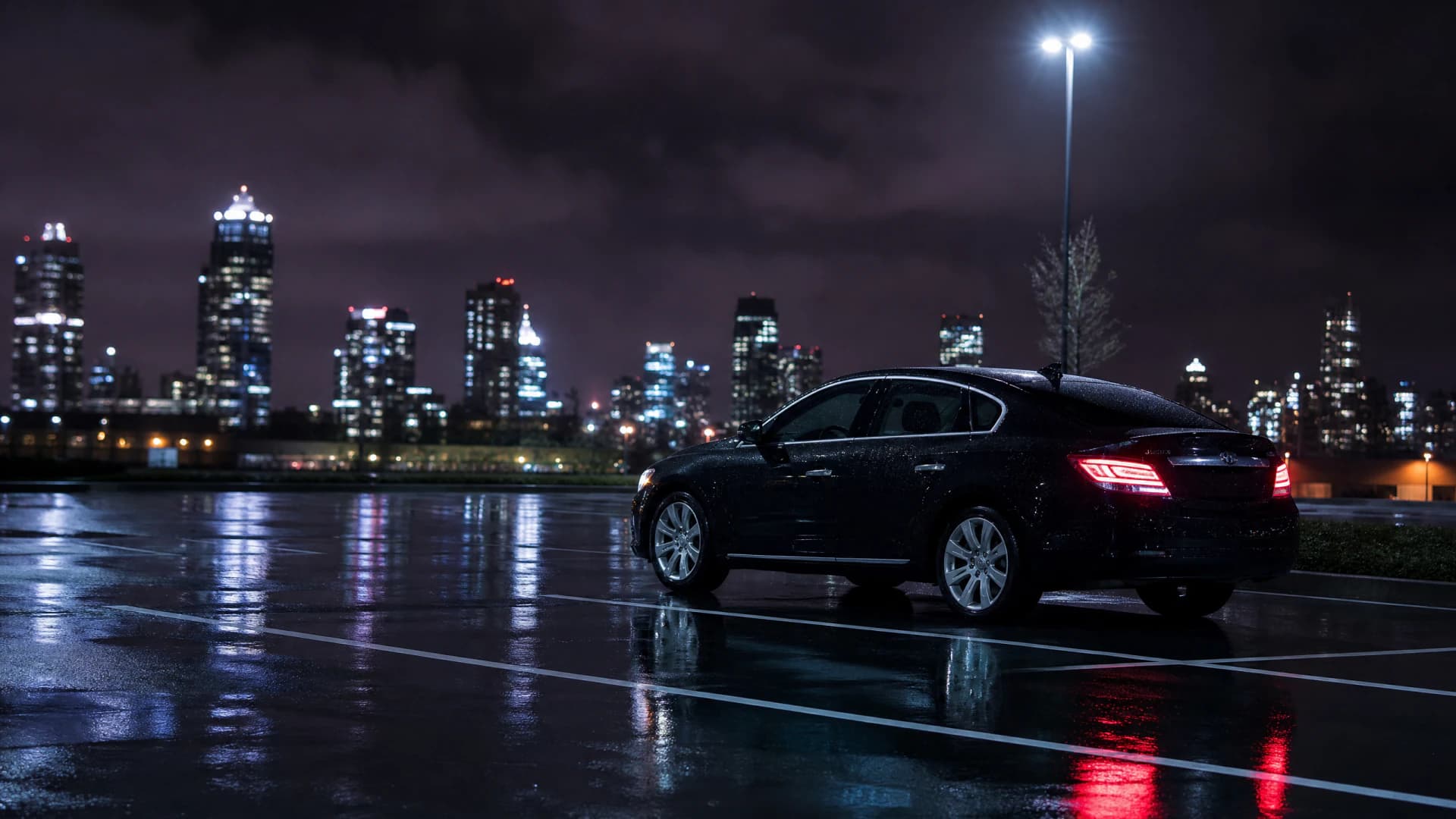
Nighttime driving restrictions — typically prohibiting driving between 11 PM and 5 AM for the first 6–12 months of provisional licensing — reduce crash risk by approximately 10–15% according to NAIC research, and insurers price this into provisional-stage premiums. If your state doesn't mandate this restriction or if you're granted an exemption for work or school, your rate may be 5–10% higher than peers with the restriction in place. The restriction isn't just regulatory theater: fatal crash rates for 16–17 year-old drivers are roughly three times higher between midnight and 6 AM compared to daytime hours.
Passenger restrictions — limiting non-family passengers under 21 for the first 6–12 months — address the documented risk multiplier effect. Each additional teenage passenger increases crash risk by approximately 44% according to Insurance Institute for Highway Safety studies, and two or more passengers roughly double the fatal crash risk. Carriers in states with strict passenger limits price provisional policies 8–12% lower than states without these rules, though this is usually invisible to you as a buyer since you're comparing within your own state market.
Cell phone and texting bans for provisional drivers, now enacted in most states, create measurable risk reduction but smaller premium impacts (typically 2–5%) because enforcement is inconsistent and violation rates remain high. The insurance pricing follows claims data, not regulatory intent, so restrictions that aren't effectively enforced don't generate large discounts.
Zero-tolerance alcohol policies for drivers under 21 are priced into all under-21 policies regardless of GDL stage, but a violation during your provisional period will likely make you uninsurable in the standard market. You'd need to secure coverage through the non-standard or assigned risk market at rates typically 150–300% higher than standard provisional pricing.

Bring Your Under 25 Rate Back to Earth
Compare Rates for Drivers Under 25How to Capture Discounts at Each Stage Transition
Contact your insurance agent or carrier within 48 hours of completing each GDL milestone. You'll need to provide proof: a copy of your new license showing the updated classification, documentation of completed driver education hours if required, or a state-issued certificate of completion for your provisional period. Most carriers can process the reclassification within 3–5 business days and will backdate the rate reduction to the effective date of your license change — but only if you request it promptly. Waiting weeks or months typically means the discount applies from the date you notify them, not the date you earned it.
When moving from learner's permit to provisional license, explicitly ask about driver training discounts if you completed an approved course beyond state minimums. Approximately 15–20 hours of supervised driving is typical for state requirements, but completing 30–50 hours or a certified driver education program can unlock additional discounts of 5–15% that don't automatically apply just because you mentioned finishing driver's ed. You need to provide the completion certificate and specifically request the discount by name.
At the provisional-to-full license transition, request a full policy review rather than just a license status update. This is your opportunity to add or remove coverages as your situation changes. If you've purchased your own vehicle, you'll need to add it to the policy. If you're moving off a parent's policy to your own, this is when you'll see the full rate impact of independent coverage — typically $350–$600 per month for full coverage depending on vehicle, location, and your driving record during the provisional period.
Document everything in writing. If you call to report a license status change, follow up with an email confirming the conversation, the effective date of the rate change, and the new premium amount. Billing errors are common during policy modifications, and you want a paper trail if your rate doesn't decrease as promised or if the change doesn't appear on your next bill.

When GDL Completion Doesn't Lower Your Rate as Expected
If you accumulated violations or claims during your provisional period, the standard progression discount may be partially or fully offset by surcharges. A single at-fault accident during your first year of driving typically increases your premium 40–60%, which can completely erase the 10–20% discount you'd otherwise receive when moving to full licensure. The two factors stack rather than cancel — you get the license status discount applied to an already-inflated base rate. If your rate didn't drop or barely changed, request a detailed breakdown showing both the license reclassification discount and any active surcharges so you understand the true math.
Some carriers use continuous insurance history as a rating factor more heavily than license status. If you had a gap in coverage (more than 30 days uninsured) during your provisional period, you may be rated as a new policyholder rather than a driver with 12–18 months of history, which eliminates most progression discounts. Maintaining continuous coverage — even if it's just being listed on a parent's policy — is often worth more in rate reduction than the license milestone itself.
State minimum coverage vs. full coverage creates different discount structures. If you're carrying only liability insurance (state minimums), your rate may not decrease as dramatically at stage transitions because you're not paying for the collision and comprehensive coverages where most GDL-related risk pricing lives. A provisional driver with liability-only might see a 5–8% reduction moving to full license, while the same driver with full coverage might see 15–20%, simply because there's more premium dollars exposed to the risk adjustment.
If you're comparing quotes after completing GDL requirements, make sure every carrier knows your exact license status and completion dates. Quoting systems often default to "newly licensed" which may not distinguish between a brand-new provisional driver and someone who's completing their second year of provisional driving with a clean record. That classification error can inflate quotes by 20–40% across multiple carriers, making it look like no one offers a completion discount when the real issue is data entry.
Frequently Asked Questions
Do I need to tell my insurance company when I get my full license?
Yes — most insurance carriers won't automatically reduce your rate when you transition from provisional to full license unless you notify them and provide updated license verification. The discount typically ranges from 10–20% but only applies from the date you inform the carrier, not retroactively.
How much does insurance drop after completing graduated licensing?
Insurance typically decreases 10–20% when moving from provisional to full unrestricted license, assuming no violations or claims during the provisional period. The total reduction from learner's permit through full license completion is often 30–40% over 18–24 months, though this varies significantly by carrier and state.
Can I get a GDL discount if I got my license as an adult?
Adult drivers over 18 typically aren't subject to graduated licensing restrictions in most states, so GDL-specific discounts don't apply. However, completing a state-approved driver education course as a new adult driver can provide similar 5–15% discounts at most carriers, and you should specifically request these when getting initial quotes.
What happens to my insurance if I violate GDL restrictions?
Violating graduated licensing restrictions (driving past curfew, carrying unauthorized passengers, etc.) during your provisional period can increase your insurance premium 20–50% and may result in license suspension requiring an SR-22 filing. Some violations may disqualify you from standard market coverage entirely, forcing you into non-standard insurance at 150–300% higher rates.
Related Articles

Delivery Driver Insurance for New Drivers Under 25
4/5/2026
Leaving Parents' Policy Without Gap in GA
6/11/2026

Car Insurance for New Military Drivers Under 25
4/5/2026

Gap Insurance for New Drivers With Car Loans
4/5/2026

TX Financed Car Full Coverage Rules
6/11/2026

Add a Car to Insurance Before Driving Off the Lot
4/5/2026