
Car Insurance for New Drivers in Virginia: Real Costs & Options
Free to compare
Why Virginia Charges New Drivers $325/mo on Average
You just got your license or your first car, searched for insurance quotes, and saw numbers between $280 and $400 per month. That's not an error. Virginia new drivers under 25 pay an average of $325 per month for full coverage—roughly 95% higher than the state's overall average of $167/mo. The gap exists because Virginia is a tort liability state, meaning at-fault drivers can be sued directly for damages beyond policy limits, and insurers price that exposure aggressively for drivers with fewer than three years of licensed driving history.
The premium you're quoted reflects three specific rating factors Virginia carriers weight heavily: years licensed (zero to two years typically adds 80-110% to base rate), age (under 25 adds another 40-60%), and vehicle assignment if you're on a family policy. A 19-year-old with their own policy on a 2018 sedan will generally pay $290-$340/mo, while the same driver added to a parent's policy with multi-car and prior insurance discounts pays $180-$240/mo for identical coverage.
Virginia also allows carriers to use credit-based insurance scores, and new drivers typically have thin or no credit files. That absence of credit history can add another 15-25% to your quoted premium compared to an applicant with established credit, even if driving records are identical. If you're getting your first policy within 60 days of moving out or graduating, ask the carrier if they offer a "new to market" exception that uses parental credit scoring for the first policy term.

The Virginia Liability Minimum vs. What You Actually Need
Virginia's minimum required liability coverage is 25/50/20: $25,000 per person for bodily injury, $50,000 per accident, and $20,000 for property damage. You can legally drive with just that, and it will cost you roughly $95-$140/mo as a new driver. But here's what that actually covers: if you cause an accident that injures two people, your policy pays a maximum of $50,000 total. The average Virginia injury claim settlement in 2023 was $38,000, and the average vehicle total loss was $22,000. A single moderate accident where you're at fault could exceed your coverage limits entirely, leaving you personally liable for the difference.
Most agents recommend 100/300/100 coverage for new drivers in Virginia, which increases your monthly cost by approximately $45-$65 but covers you to $100,000 per person, $300,000 per accident, and $100,000 property damage. That structure handles the majority of accident scenarios without exposing your personal assets. If you're financing or leasing a vehicle, your lender will require collision coverage and comprehensive coverage regardless, which brings your total monthly premium into the $280-$350 range anyway.
Virginia also offers an uninsured motorist fee option: pay the state $500 annually and drive uninsured. This is not insurance—you have zero coverage if you cause an accident, and you're still personally liable for all damages. It's a legal compliance option, not a financial protection strategy, and should only be considered if the vehicle has minimal value and you have substantial liquid assets to cover potential liability.

How Coverage Choices Change Your Rate in the First 90 Days
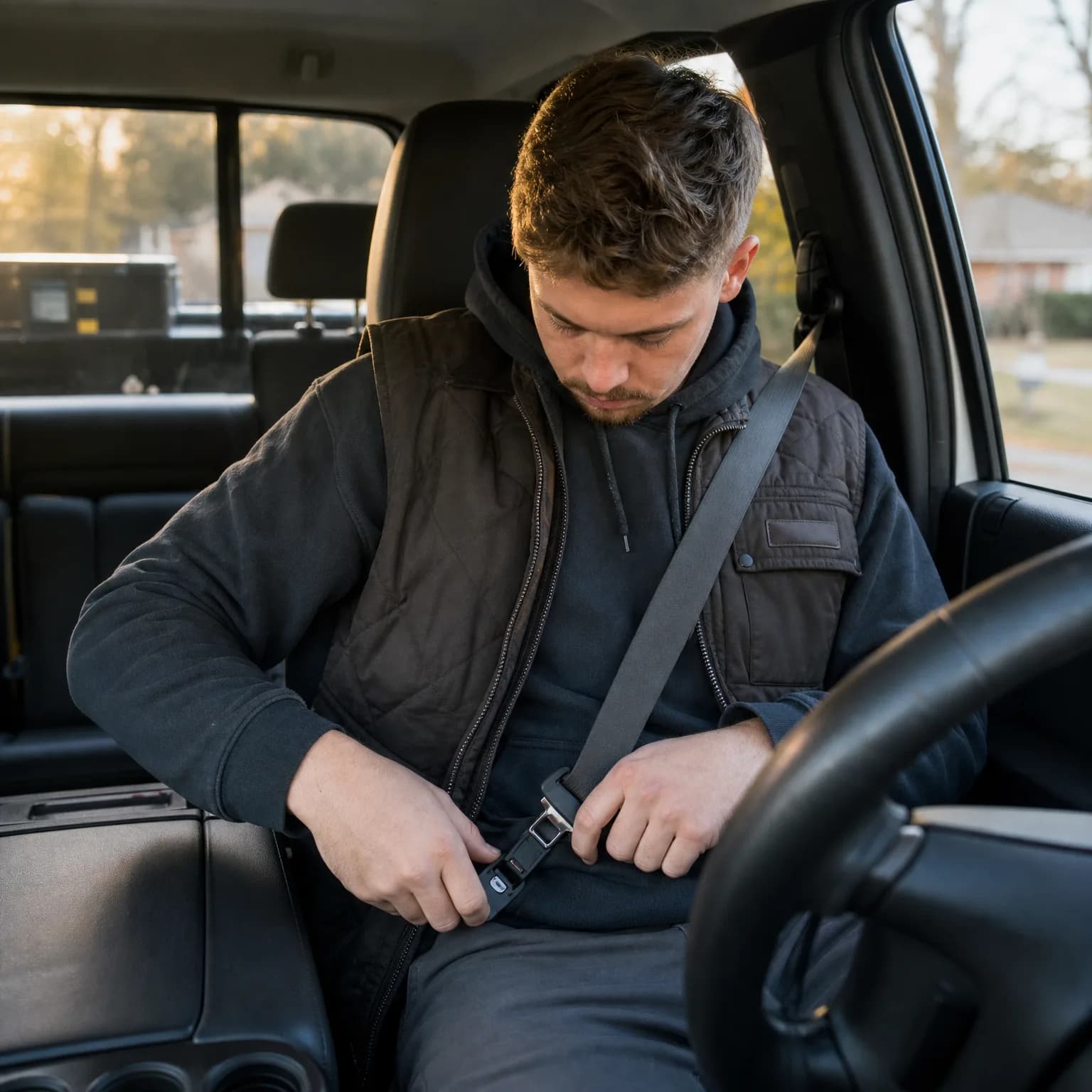
The coverage decisions you make when you first buy a policy have a larger rate impact than switching carriers six months later. Choosing a $1,000 deductible instead of $500 on collision and comprehensive saves approximately $30-$45/mo for a new driver in Virginia—that's $360-$540 annually. But the break-even point matters: if you file a claim in the first year, you pay an extra $500 out of pocket with the higher deductible, and your rate increases 20-35% at renewal regardless of deductible choice. The savings strategy only works if you avoid claims for at least 18 months.
Adding uninsured motorist coverage at the same limits as your liability (100/300) costs an additional $18-$28/mo in Virginia, where approximately 12% of drivers are uninsured. That coverage pays your medical bills and lost wages if you're hit by an uninsured driver, and it applies even if you're a passenger in someone else's vehicle. For new drivers who commute daily or drive in the Hampton Roads or Richmond metro areas, the frequency of uninsured driver accidents makes this one of the highest-value optional coverages available.
Rental reimbursement and roadside assistance each add $8-$15/mo. Rental reimbursement pays for a rental car while your vehicle is being repaired after a covered claim—usually $30-$40 per day for up to 30 days. Roadside covers towing, jump-starts, and lockout service. If you already have AAA or a vehicle manufacturer's roadside plan, you're duplicating coverage. If you don't, and you drive an older vehicle or commute more than 20 miles daily, the $10/mo cost is generally justified by a single tow, which averages $125-$175 in Virginia metro areas.

Bring Your Under 25 Rate Back to Earth
Compare Rates for Drivers Under 25Discounts That Actually Apply to New Drivers in Virginia
Most new drivers in Virginia qualify for three to five discounts immediately, but the value ranges wildly by carrier. A good student discount (typically 3.0 GPA or higher) reduces premiums by 15-25% at most carriers, which translates to $45-$80/mo savings on a $320 base premium. You'll need to submit a transcript or report card every six months to maintain eligibility, and some carriers auto-verify through the National Student Clearinghouse if you're enrolled in college.
Defensive driver course discounts apply in Virginia if you complete a state-approved driver improvement course, even if you weren't court-ordered to take one. The discount is typically 5-10% and lasts three years. The course costs $25-$60 online and takes four to eight hours to complete. If you're quoted $310/mo, a 10% discount saves $372 annually, creating a net benefit of roughly $310 in year one.
Paperless and auto-pay discounts are nearly universal and stack—usually 3-5% each. Together they save about $20-$30/mo, but only if you maintain continuous auto-pay without a failed payment. A single missed payment typically revokes the discount for the remainder of the term and may trigger a lapse notice, which creates a coverage gap that increases your rate 15-30% at the next renewal.
Multi-policy discounts (bundling renters or condo insurance with auto) save 10-20%, but only if you're the named policyholder on both. If you're living in a dorm or with parents, you likely can't take advantage of this until you have your own lease. Telematics or usage-based programs like Snapshot or Drivewise can reduce rates by 10-30% if you demonstrate safe driving habits over 90 days, but harsh braking, late-night driving, and mileage over 800/mo typically reduce or eliminate the discount.

When Adding Yourself to a Parent's Policy Saves More
If your parent or guardian has an active Virginia auto policy with at least three years of claim-free history, adding yourself as a listed driver costs significantly less than buying your own policy—typically $120-$180/mo vs. $280-$350/mo for identical coverage. The savings come from the primary policyholder's tenure discounts, multi-car discount (if applicable), and established insurance score, all of which you inherit as a listed driver.
But this only works if you live in the same household. Virginia carriers define "household" as the same permanent address on file with the DMV. If you're away at college, you can stay on a parent's policy as long as your license lists their address and you don't have a separate lease or vehicle registration at your college address. The moment you register a vehicle in your own name or establish a separate residence, most carriers require you to start your own policy.
Being listed on a parent's policy also means any claim you cause affects their policy and their rate at renewal. A single at-fault accident increases the household premium by 25-40% for three to five years. If your parents have a claim-free discount or preferred tier pricing, one accident can eliminate $600-$1,200 in annual savings they've built over years. That cost-sharing reality should be part of the decision, not just the monthly premium difference.
If you do start your own policy, some carriers offer a "previously insured" discount if you were a listed driver on a family policy for at least six months. That discount ranges from 5-15% and helps bridge the gap between family plan pricing and solo pricing. You'll need a letter of experience from the prior carrier confirming your listed driver history and claim record.
What Happens After Your First Six Months
Most Virginia carriers re-rate new driver policies at the six-month renewal, and your premium typically drops 5-12% if you've maintained continuous coverage with no claims or violations. That decrease reflects the move from "zero months insured" to "six months insured" in the carrier's rating algorithm. The drop is automatic—you don't need to request it—but it only applies if you haven't had a lapse in coverage longer than 30 days.
After 12 months of claim-free driving, you become eligible for a broader set of discounts and tier improvements. Many carriers move you from a "new driver" tier to a "standard driver" tier, which can reduce your rate another 8-15%. At the two-year mark, assuming no at-fault claims, your rate typically resembles the standard market rate for your age and vehicle, erasing most of the "new driver" penalty. A driver who starts at $325/mo can reasonably expect to pay $210-$240/mo after two years if their record stays clean.
If you do have a claim or violation in your first year, expect a 20-35% increase at renewal, and that surcharge lasts three to five years depending on severity. A speeding ticket 15 mph over the limit adds roughly $50-$75/mo. An at-fault accident with a claim over $2,000 adds $85-$130/mo. If you accumulate multiple violations or a serious offense, you may be moved to the non-standard market, where premiums range from $400-$650/mo for new drivers.
Frequently Asked Questions
Can I get car insurance in Virginia without a license?
Most carriers require an active Virginia driver's license to issue a policy in your name, but you can be listed as an excluded driver on someone else's policy if you own a vehicle but don't drive it. If you have a learner's permit, you're typically covered under a parent or guardian's policy automatically without being formally listed until you receive your full license.
How long do I have to get insurance after buying a car in Virginia?
Virginia requires proof of insurance before you can register a vehicle or drive it off the lot. Most dealerships coordinate temporary coverage on the spot, but if you're buying from a private seller, you need to purchase insurance and obtain proof before completing the title transfer at the DMV. Driving without insurance in Virginia results in license suspension, a $500 uninsured motorist fee, and SR-22 filing requirements.
Do I need full coverage if I own my car outright in Virginia?
Virginia only requires liability coverage if you own your vehicle with no lien, but dropping collision and comprehensive saves only $140-$190/mo on average for new drivers. If your car is worth more than $5,000, most advisors recommend keeping full coverage since a total loss would cost more to replace out-of-pocket than the premiums saved over two years.
Will my rate go down when I turn 25 in Virginia?
Age 25 is a meaningful rating threshold at most carriers, typically reducing your premium by 10-18% if you have a clean record. However, years of continuous coverage and claim-free history matter more than age alone—a 25-year-old with two years of insured driving history will still pay less than a 25-year-old buying their first policy.
What is the cheapest car insurance company for new drivers in Virginia?
No single carrier is cheapest for all new drivers in Virginia. GEICO and State Farm tend to offer competitive rates for new drivers with good student status, while USAA consistently offers the lowest rates for eligible military families. Rate differences between top carriers range from $60-$120/mo for identical coverage, which is why comparing at least three quotes is standard guidance.
Related Articles

Delivery Driver Insurance for New Drivers Under 25
4/5/2026

Leaving Parents' Policy Without Gap in GA
6/11/2026

Car Insurance for New Military Drivers Under 25
4/5/2026

Gap Insurance for New Drivers With Car Loans
4/5/2026

TX Financed Car Full Coverage Rules
6/11/2026

Add a Car to Insurance Before Driving Off the Lot
4/5/2026